Managers are expected to get more from their teams while protecting their wellbeing. But knowing where healthy challenge ends and harmful pressure begins isn’t always straightforward.
Stretch people and they grow. Keep stretching without checking in, and you risk employee burnout. Ease off too readily, and you risk lowering expectations when people might simply need encouragement, support or a bit of challenge.
This year’s Stress Awareness Week theme, Rehumanising the Workplace, is a timely prompt to consider that balance. But are your managers truly equipped to balance performance, pressure and people when faced with competing demands from every direction?
The Modern Pressure Cooker: Are We Asking Too Much of People?
In many workplaces, people are facing pressure from several directions at once. On its own, any one of these might be manageable. A new AI tool to learn. Another restructure. Higher targets with the same headcount. A salary that doesn’t stretch as far as it used to. Family responsibilities that don’t stop between 9–5.
The trouble is that these pressures rarely arrive one at a time, and nobody leaves them at the door, whether that’s at home or at work. In PwC’s 2026 UK Hopes and Fears survey of 2,023 workers, 59% said the cost of living had affected their work in the past year, and 41% were concerned about job cuts. Fatigue and burnout (29%) and workload (28%) were also identified as the biggest barriers to productivity.
The cost of getting this wrong is already visible. HSE figures for 2024/25 show 964,000 workers in Great Britain suffering from work-related stress, depression or anxiety, with 22.1 million working days lost. That’s an average of 22.9 days per case, or more than four working weeks.

So, when someone struggles with a task that looks small, the task may not be the problem. It may just be the thing that landed on top of everything else.
Are We Building Resilience or Just Expecting People to Endure More?
The two aren’t always easy to tell apart. Building resilience at work is important, but there’s a difference between helping people manage pressure and simply expecting them to absorb more of it.
Acas notes that a certain amount of pressure can keep people motivated. Removing every challenge isn’t the answer. But neither is using “you need to be more resilient” to avoid difficult conversations about workloads, priorities or unrealistic expectations.
Of course, business pressures don’t disappear because people are finding things difficult. Sometimes the deadline is fixed, the budget is set and the organisation needs everyone to pull together through another demanding period.
That’s where leadership becomes more complicated. The answer isn’t necessarily to take the pressure away, but to understand what’s driving it, be honest about expectations and recognise that different people respond to the same pressures differently. And their capacity to cope can change over time.
The HSE’s Management Standards identify six areas of work design associated with stress: demands, control, support, relationships, role and change. These are influenced by organisational decisions as well as everyday management. With restructuring, new technology, rising expectations and tighter resources, managing pressure is as much a people challenge as an operational one.
Managing People Under Pressure: Do Your Managers Have the Skills?
Telling healthy stretch from harmful pressure is a people skill, and not every manager has been taught it. At RightTrack Learning, we often see people promoted because they’re brilliant at their jobs, without necessarily having developed the skills to balance tasks and people.
The challenge isn’t always obvious. Sometimes someone tells their manager, “I can’t take this on.” Other times, they say nothing. They become quieter, withdraw, disengage or simply keep pushing until they reach breaking point. By the time their manager notices, the organisation may already be at risk of losing talented people, taking valuable experience, knowledge and capability with them. And replacing someone is only part of the cost.
Neither situation is easy to get right. Accept someone’s concerns without exploring them and you may lower expectations when what they really need is encouragement or support. Dismiss their concerns, or miss the warning signs, and you risk losing someone who was genuinely struggling.
“Stretch usually feels energising, so you’ll see curiosity, questions and a bit of nervous excitement, even if the person is out of their comfort zone,” says Kasmin Cooney OBE, Founder of RightTrack Learning. “When it tips over, you’ll notice changes like withdrawal, irritability, mistakes creeping into their work or the individual working longer hours.”
Recognising the signs is only part of the challenge. Managers need emotional intelligence, the confidence to have honest conversations and the judgement to know when to support, challenge or hold firm on expectations.
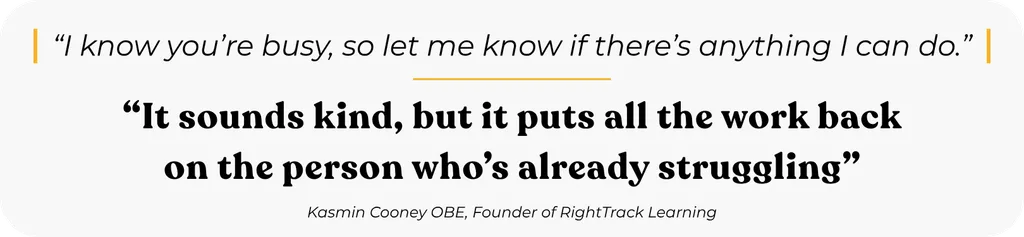
As Kasmin explains, managers sometimes say, “I know you’re busy, so let me know if there’s anything I can do.” The problem is that this puts responsibility back on someone who may already be struggling, and most people simply say they’re fine.
Equally, not every concern about workload means expectations are unreasonable. Someone may need clearer priorities, greater confidence, better time management or a direct conversation about accountability.
Good management isn’t about assuming every concern requires less work, or that every objection is resistance. It’s about having the skills to understand the difference. And when managers lack those skills, how many talented people end up struggling, disengaging or leaving before anyone recognises there’s a problem?
When Business Pressures Can’t Be Reduced: How Should Leaders Respond?
Even the most emotionally intelligent manager can’t remove every source of pressure. But what happens when managers recognise their teams are struggling and lack the authority, resources or organisational support to do much about it?
They may be expected to demonstrate empathy while being measured primarily on results. But if a manager consistently exceeds targets while their team experiences high turnover, rising absence and disengagement, should they automatically be considered a high performer? How managers achieve their results should matter just as much as the results themselves, with team development, engagement and retention considered alongside business performance.
Equally, managers need backing to make difficult decisions. When several departments insist their priorities are urgent, managers shouldn’t be left to absorb the pressure and pass it down to their teams. They need senior leaders willing to step in, help prioritise and back them when expectations need challenging.
Ultimately, supporting wellbeing doesn’t mean abandoning accountability, and maintaining accountability doesn’t mean ignoring wellbeing. But managers can’t achieve that balance through individual skill alone. They need an organisation that enables them to make sound decisions.

Rehumanising the Workplace: What Should HR and Senior Leaders Be Asking?
This year’s Stress Awareness Week theme, Rehumanising the Workplace, brings us back to the bigger question: are we creating workplaces where people can perform at their best without overlooking the pressures they’re under?
Rehumanising the workplace doesn’t mean removing every challenge or lowering expectations. It means understanding the people behind the performance and recognising that how we manage people matters.
The CIPD’s Good Work Index 2025 found that people who feel their job damages their mental health are less willing to go beyond what’s required, and 34% are likely to quit within a year. Yet organisations can invest heavily in wellbeing initiatives without addressing whether their managers have the skills, confidence or capacity to manage people effectively.
Only 60% of managers told the CIPD they have the training and information to manage people well, and 59% said they have the time. For HR and senior leaders, there are three questions worth considering:
1. Are we being honest about the pressures we’re placing on people?
When expectations rise or resources are stretched, do people understand why, what matters most and what’s expected of them? Are we communicating openly about difficult decisions, or inadvertently creating more uncertainty?
2. Have we equipped managers to recognise the difference between healthy stretch and harmful stress?
Can they spot the warning signs, have honest conversations, challenge performance and support people through difficult periods? Or are we expecting people promoted for their technical skills to develop these capabilities on their own?
3. Are we creating the conditions for good management, or making it harder?
Do managers have the time, authority and backing to support their teams and challenge unrealistic expectations? Are the behaviours we reward consistent with the leadership behaviours we say we value?
This isn’t just about employee wellbeing. Employers have a legal duty to assess and act on work-related stress risks, but the wider issue is how everyday leadership affects engagement, retention and performance.
Better Management, Not Just More Resilience
Perhaps the biggest question isn’t whether we’re asking too much of people. It’s whether we’re giving managers what they need to recognise when we are.
Organisations will always face competing demands and periods when everyone needs to pull together. Rehumanising the workplace starts with recognising that getting the best from people and doing right by them should be part of the same conversation.
And that takes more than good intentions. It takes managers with the skills, confidence and support to lead people well, especially when the pressure is on.
Knowing what to say is one thing. Having the confidence to say it in the moment is another.
If you’re thinking about investing in your leaders and managers, take a look at our flagship 7 Steps to Modern Management programme. We use professional actors and realistic workplace scenarios to help managers practise tricky conversations, tackle everyday challenges and build confidence in handling them. Alternatively, explore our wider Management & Leadership Training options, covering everything from emotional intelligence and resilience to courageous conversations.
And if a chat would be useful, just let us know.