Workplace bullying, men and the gap between having a speak-up policy and creating a speak-up culture.
Most organisations have policies, reporting procedures and clear messages about workplace bullying and treating colleagues with respect. But having these things in place doesn’t mean that people trust them enough to use them.
There’s still an expectation, particularly among men, to be resilient, take things on the chin and not make a fuss. So what happens when the behaviour someone is expected to laugh off is making their working life miserable?

With Anti-Bullying Week (16th-20th November), this year themed ‘Break the Silence’, and International Men’s Day (19th November) falling in the same week, it’s a good time for HR and senior leaders to ask a simple question: when someone is struggling, who’s listening?
Why is workplace bullying easy to miss?
There’s no legal definition of bullying, but Acas describes it as unwanted behaviour that is offensive, intimidating, malicious or insulting, or an abuse or misuse of power that undermines, humiliates, denigrates or injures someone.
That covers far more than shouting or obvious aggression. Bullying at work can look like constant criticism, someone’s ideas being put down in meetings, being left out or “jokes” that keep landing on the same person. These quieter behaviours are easier to brush off, both by the people around them and by the person on the receiving end.
Bullying can affect anyone, including people who appear confident, successful or senior. Seeming to cope isn’t the same as coping: in a 2026 LiveCareer survey, nearly eight in ten working men said they’d hidden stress or struggles at work to appear strong.
For HR teams, that means looking at patterns and impact, not just how serious an incident appears, or how well someone is coping on the surface.
When does workplace banter become an organisational problem?
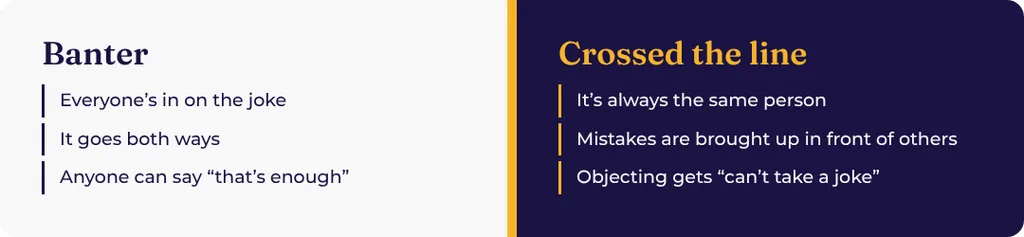
One of the places those quieter behaviours hide is banter. Humour can be an important part of building relationships and creating a positive working environment, and banter isn’t the problem in itself.
The problem starts when the humour stops being shared: when one person is always the target, when their mistakes keep being brought up in front of others, or when they can’t object without being told they “can’t take a joke”. At that point, it can fall within Acas’ description of bullying, or, if it relates to a protected characteristic, such as sex, age or race, it could amount to harassment under the Equality Act 2010. Either way, what matters is the effect on the person, not whether anyone meant harm.
Not wanting to be seen as someone who can’t take a joke can weigh heavily on men. When traditional expectations around masculinity say men should shrug things off, saying something isn’t funny can feel like admitting weakness. It’s harder still when the “joke” comes from someone popular, high-performing or senior, which is exactly when it most needs calling out.
It becomes an organisational problem when it’s tolerated, and people learn that staying quiet is easier than speaking up. The question for leaders isn’t whether people are allowed to have a laugh. It’s whether everyone feels equally comfortable, respected and able to challenge behaviour that crosses the line.
Why might men find it difficult to speak up about bullying at work?
It’s important not to assume all men experience bullying in the workplace in the same way or are necessarily less likely to report it. But for many, the hardest part isn’t recognising what’s happening. It’s deciding whether reporting workplace bullying is worth the risk.
Will colleagues treat them differently? Could it affect their progression? Will the manager actually do anything?
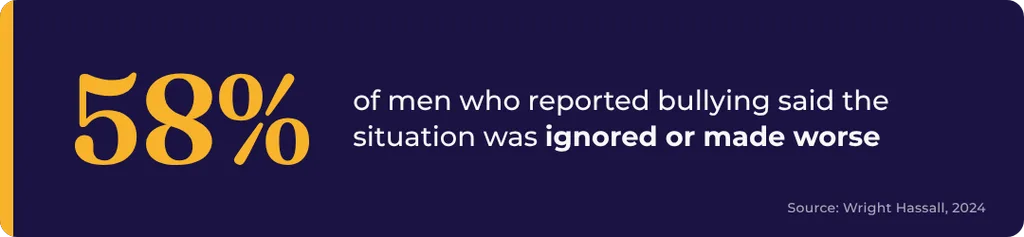
Evidence suggests those fears aren’t unfounded. In a 2024 UK survey by law firm Wright Hassall, 58% of men who reported bullying said the situation was ignored or made worse. So, the issue isn’t simply whether men are willing to speak up. It’s what happens when they do.
That’s why psychological safety needs to work for everyone. We shouldn’t expect people to demonstrate vulnerability in a particular way before their concerns are taken seriously.
What happens after someone speaks up?
Encouraging people to speak up is only half the job.
CIPD’s research highlights a big disconnect. It found that 81% of employers believe they’re doing enough to prevent and manage bullying and harassment. Yet only 36% of employees who had experienced conflict at work felt it had been fully resolved.
A lot depends on the first conversation. Imagine two managers hearing the same concern from a man in their team:
The first brushes it aside, saying it’s just how the team works and the employee shouldn’t take things personally.
The second listens, asks questions, takes the concern seriously and explains what happens next. They don’t have to jump to conclusions, but they do need to establish the facts and follow the right process.
The first response tells the whole team that speaking up isn’t worth it. The second makes it more likely that people will raise concerns early, before things escalate.
Confidentiality, appropriate follow-up and protection from victimisation are essential. If someone speaks up and nothing meaningful happens, they may not try again.
The real measure of a speak-up culture isn’t how many people use the reporting process. It’s whether people believe doing so will make a difference.
What can HR and senior leaders do differently to help?
1. Look beyond formal complaints
Don’t rely solely on grievance numbers to understand workplace culture. Look for patterns in employee feedback, engagement surveys, exit interviews, absence data and informal concerns. Low reporting numbers should prompt questions, not automatic reassurance.
2. Challenge the behaviours that have become normalised.
Managers need to recognise when banter crosses the line into inappropriate behaviour, and when repeated exclusion or criticism is being overlooked. That includes “man up” style comments that make it harder for men to admit something’s wrong. Building allyship and psychological safety across teams helps people feel able to say when something isn’t ok. Consistency matters, whoever is involved.
3. Equip managers to handle difficult conversations
Managers are often the first people employees approach, and that first conversation shapes what happens next. They need the confidence and skills to listen, challenge behaviour, manage conflict and recognise when an issue needs formal escalation.
4. Measure the quality of your response, not just the process.
Ask whether concerns are resolved, whether employees feel supported afterwards and whether inappropriate behaviour stops. Look at whether people experience negative consequences for speaking up.
A good workplace is one where people don’t have to prove they’re struggling
None of us should have to choose between being resilient and admitting when something isn’t right. People can enjoy their job, be confident in their abilities, have a good sense of humour and still be affected by somebody else’s behaviour. That’s not a contradiction.
So, when men are bullied at work, who’s listening? If the answer is only the formal process, it will only hear the people who use it.
Here’s the question for every HR and leadership team: are you measuring how many people speak up, or paying attention to the ones who don’t?