It’s 10.30pm. The free bar has been open since 7pm. Everyone’s a bit tipsy. At one end of the table, a mixed group are giving marks out of ten for who’s the best-looking in the office, and who they’d “take home” from each team. It’s loud and everyone’s laughing. A colleague sitting nearby isn’t part of it, but she hears her name come up.
To the group, it’s just a bit of fun. Nobody’s said anything to her or directly, and she may never mention it. But any unwanted conduct of a sexual nature can be sexual harassment, whatever the intent, and it doesn’t have to be aimed at the person affected. It also doesn’t matter that it happened outside of the office. It’s a work event, so if it’s reported, the organisation can be held liable, not just the people involved.
The work Christmas party is the most predictable harassment risk in the calendar. And this is the first one since the duty to prevent sexual harassment was strengthened by the Employment Rights Act 2025 on 30 October 2026. Employers must now take “all reasonable steps” to prevent it and can also be held liable when people outside the organisation harass their staff.
Now, we’re not saying cancel the party. But you do need a plan. This guide covers whether your party is covered, what to do before, during and after, and how to handle concerns.
Off-Site, Out of Hours, Still Covered?
The duty covers harassment “in the course of employment”. Tribunals have long treated work social events as a part of that, even when they’re off-site and out of hours (In Chief Constable of Lincolnshire Police v Stubbs (1999), harassment at after-work drinks and a leaving party was found to count). If the event exists because people work together, assume it counts.
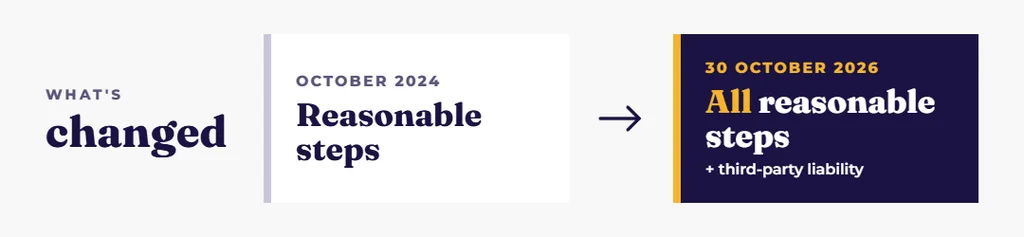
Two changes make this year different:
- “Reasonable steps” is now “all reasonable steps”. Having a policy and running one training session may no longer be enough. Employers need to show they took every step that was reasonable for their size and situation.
- Third parties are now covered. Employers can be liable if someone who doesn’t work for them harasses their staff, unless they took all reasonable steps to prevent it. At a work party, that could be venue staff, a DJ, other guests, including partners or clients.
The third-party rule covers all harassment, not just sexual harassment.
That doesn’t mean you’re responsible for every stranger at the bar, or for something you couldn’t reasonably have prevented. But you will need to show you took the steps, like choosing a suitable venue (a private space is a great choice when possible), training staff to be active bystanders, and having responsible people there who can act quickly if something happens.
If a sexual harassment claim succeeds and the tribunal finds the employer breached the duty, it can increase compensation by up to 25%.
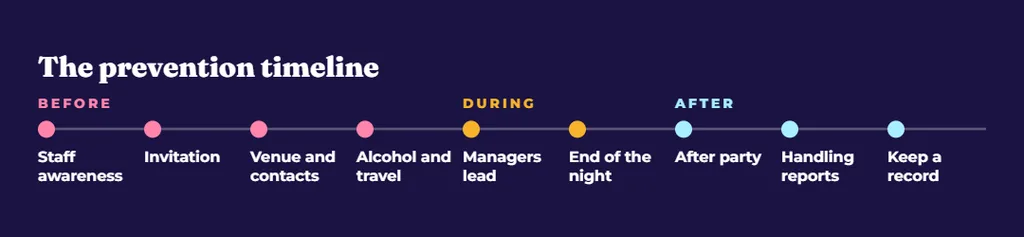
Before the Party
You can’t watch everyone all night, and you’re not expected to. “All reasonable steps” is about what you put in place beforehand and how you respond if something happens.
Most of that work happens before anyone arrives.
The Equality and Human Rights Commission (EHRC) says an employer is unlikely to meet the duty without a risk assessment and lists work social events as a risk factor.
Check your harassment policy covers work social events and third parties.
Include the party in your harassment risk assessment
Invitation Wording and Behaviour Expectations
Most party incidents don’t start with anything obvious. A comment about someone’s outfit, a joke about who’s going home with whom, a hand on the back. Because they feel minor, they get laughed off as “just banter”. But harassment is judged on its effect on the person, not the intent behind it. Read more: sexual harassment in the Workplace: It’s just Banter
Set the tone from the start. A short line in the invite, backed by a reminder from someone senior, carries more weight than a policy nobody reads.
- Add a line on behaviour to the invite
- Send a reminder of your harassment policy from someone senior, a week or so before.
- Ask people to be respectful with photos and posts about the party.
Example invite wording:
“This is a work event, so our usual standards apply. If anything makes you uncomfortable, during the party or afterwards, speak to [name].”
Staff Awareness
People can only call out what they recognise. A quick refresher before the party season helps staff spot the line and feel able to act.
- Make sure staff understand what counts as harassment, including ‘banter’
- Share simple ways to step in or support a colleague as an active bystander.
Alcohol and Travel Home
The free bar does the talking. Alcohol lowers inhibitions, and the risk climbs as the night goes on. An unlimited bar, little food and no clear finish is the classic set-up for risk.
- Use drink tokens or a set tab rather than an unlimited free bar.
- Provide plenty of food and good alcohol-free options
- Agree a clear finish time
- Sort travel home, especially for anyone travelling alone late
The Venue
- Choose a private space/function room where possible
- Tell venue staff who to come to if there is an issue, whether it involves your people or theirs.
During the Party
Managers’ Responsibilities
Managers set the tone, good or bad. If a manager drinks heavily or laughs along, others take that as permission. If they step in early, others feel able to as well. Brief them before the event: on the night, they’re still managers.
- Ask managers to lead by example, including how much they drink.
- Ask managers to step in early if behaviour starts to slip, whether it involves their own team, other guests or venue staff.
- Make sure managers know how to respond if someone raises a concern.
The End of the Night
- The risk is highest as the bar winds down.
- Make sure everyone has a way home, and no one is left in a vulnerable state.
- Keep to agreed finish time.
After the Party
The After Party
The night doesn’t end when the party does. If colleagues move onto bars in town straight afterwards, it can still count as part of the same event. Many organisations treat the end of the party as the end of their responsibility.
- Make it clear when the official event has ended, and that standards still apply if people carry on elsewhere.
Social Media
Photos, videos and comments posted after the party can be harassment too, and they reach far more people than anything said on the night.
- Get consent before sharing any photos on company channels
- Check your policy covers social media and post about work events
- If a post is reported, ask for it to be taken down and deal with it like any other concern.
Handling Reports
- Follow up on anything raised on the night. Some people may wait until after the holidays to speak up, so take later reports just as seriously.
- Listen. Thank them for telling you. Don’t push for details or try to investigate yourself.
- Make a note. Record what they’ve shared, without pressing for more information.
- Respect privacy. Only share information with those who need to know.
- Keep them safe. Consider any immediate steps needed to prevent further harassment, without disadvantaging the person reporting it.
- Follow your policy. Report concerns promptly, explain what happens next and keep checking in. Acas has more guidance on handling a sexual harassment complaint.
Keep a record
If a claim is made, you’ll need to show the steps you took.
Save:
- The invite and policy reminder
- Your manager briefing
- Venue and alcohol arrangements
- How any concerns were handled
- Your risk assessment
FAQs
Can an employer be liable for what happens at the after party?
Yes. If the afterparty follows straight on from the work event and involves colleagues, a tribunal may treat it as connected to work. Making the end of the official event clear and setting expectations beforehand both help.
Are employers responsible for harassment by venue staff or other guests?
From 30 October 2026, employers can be liable when third parties harass their staff, unless they took all reasonable steps to prevent it. That doesn’t mean you’re responsible for everything a stranger does, but you should plan for risk.
What counts as “all reasonable steps” for a Christmas party?
There’s no fixed list, as it depends on your organisation’s size and situation. For a party, it usually includes setting expectations, limiting alcohol, briefing managers, making it easy to raise concerns, acting on reports and keeping a record.
The Employment Rights Act 2025 allows the government to set out what reasonable steps means in future regulations, but none are expected before 2027. Until then, the EHRC’s technical guidance is the best reference.
Beyond the Christmas Party Season
A checklist gets you through the event. Preventing harassment all year means your people know what good behaviour looks like and feel confident stepping in when they see the opposite.
Our drama-based training is built to help with exactly that. Real scenarios, played out by actors, so people can practise the conversations they’d usually avoid.
Not sure where your organisation stands with the new duty? Take the prevention readiness quiz.
